The Process
The Bespoke Process
"Every commission begins with a conversation, and ends with an heirloom that belongs to one home alone."
Bruno Boulay
The Philosophy
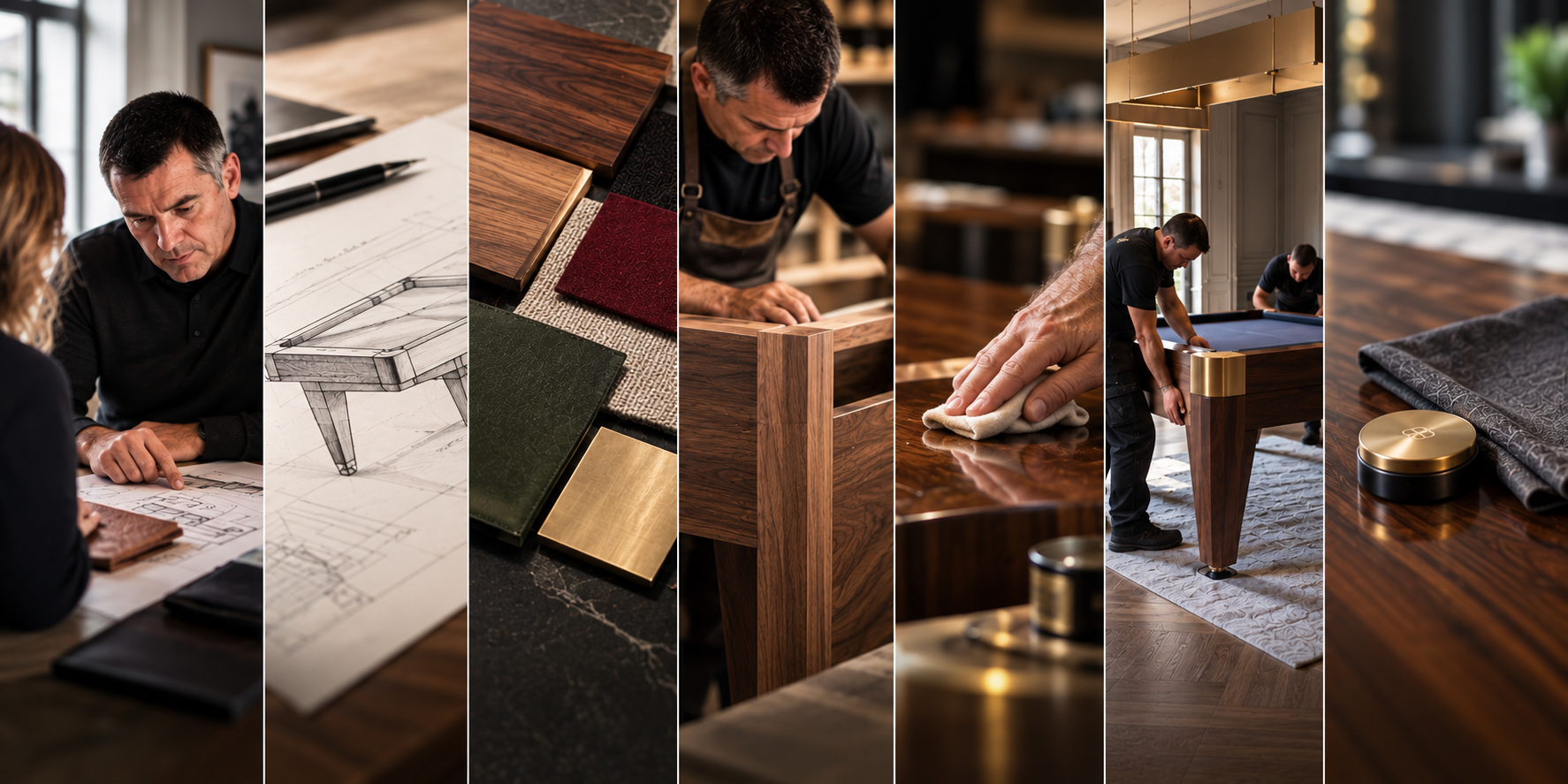
A Bruno Boulay commission is a personal collaboration between maker and client. From understanding the room and developing the design to selecting materials, cabinet making, hand finishing and installation, every stage is shaped around one client and one interior.
The Case for Bespoke
Why Commission Bespoke?
Every home is different, and every client lives differently. A room is shaped by its light, its proportions and the furniture already within it, and a table that is bought from a catalogue asks the room to adjust to its demands. A commissioned table asks nothing of the kind. It is drawn around the architecture, the way the room is used and the character of the interior, so the finished piece belongs in the space rather than merely occupying it.
The design is shaped over conversation, by samples handled in person and by a gradual exchange of drawings and refinements, rather than selected from a shelf.
Commissioning bespoke furniture creates a direct relationship between client and maker, allowing the design, materials and details to develop around the room and the people who will live with the finished piece. Read more about the craftsmanship behind every commission, or explore the materials that define it.
Inside the Process
How Bruno Approaches a Commission
An Overview
The Commission
Consultation
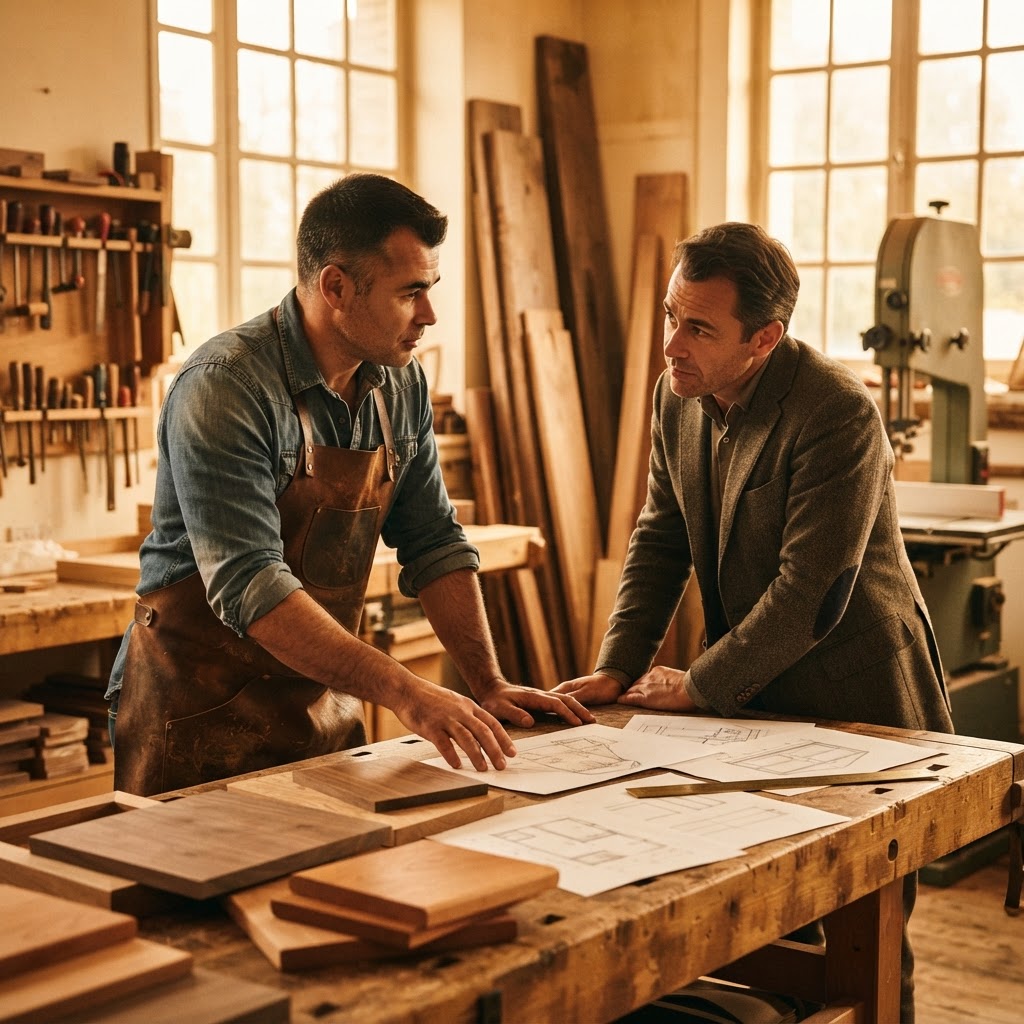
Every commission begins with a conversation, not a brief. The first meeting might take place at our Berkshire workshop, in your home or by telephone, and its purpose is simply to understand the way you live. We talk about the room, its light, its proportions and its architecture, and about the role the table is intended to play within the wider interior.
Most clients arrive with a loose idea rather than a finished one, and that is exactly what the consultation is for. Bruno listens for the character of the house, the furniture already in place and the way the room is used day to day, drawing the commission out rather than fitting it to a template. Where an interior designer or architect is involved, they join the same conversation, and the three perspectives are brought into line before any drawing is begun.
Design
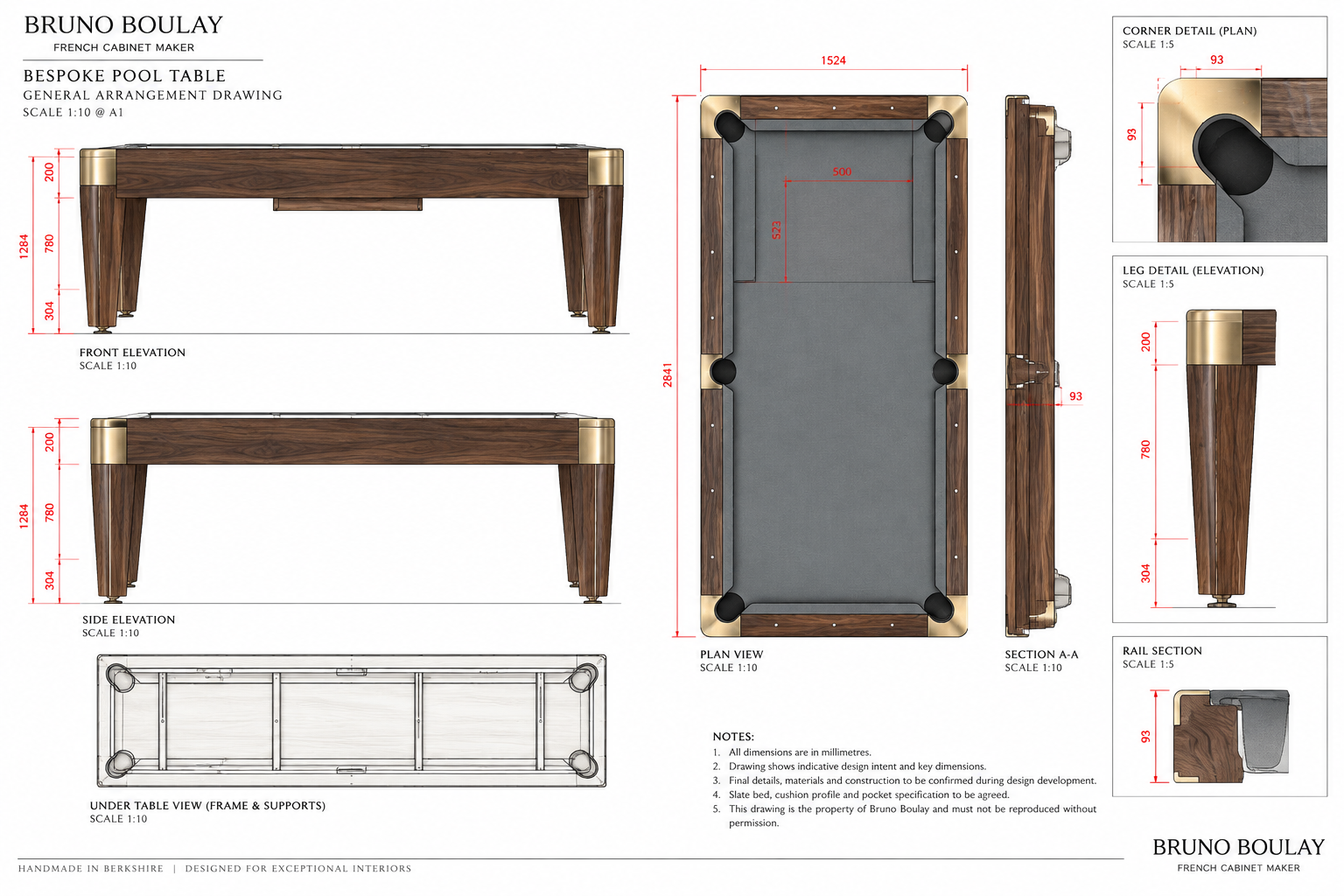
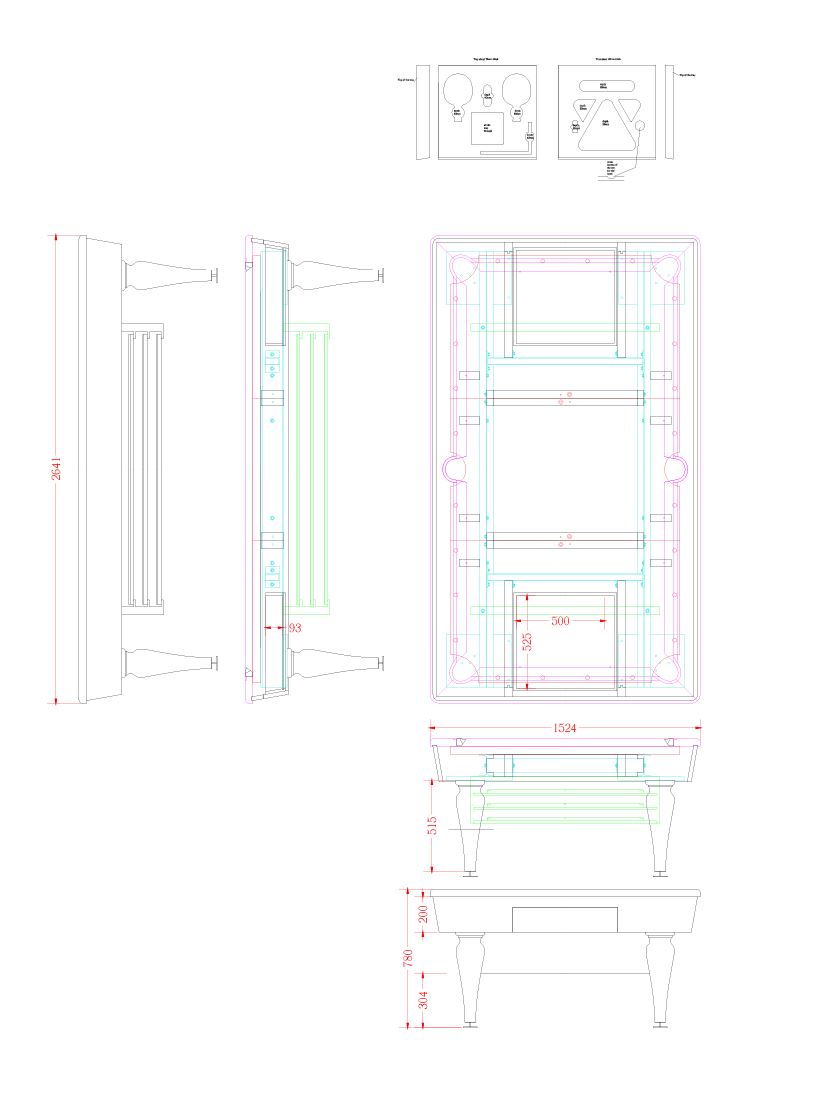
The design does not appear fully formed. It is built up from hand sketches and scaled drawings, beginning with proportion and silhouette and only later resolving the detailing, the cabinetry and the choice of materials. CAD drawings are prepared where they help the client and their designer to read the piece in three dimensions, and every dimension is considered in relation to the room.
The drawings are shared and revisited. Adjustments are made, edges softened, cloth colours tested against the interior, until the design reads as one coherent piece of furniture. Where a designer is working with us, the drawings become a shared reference throughout.
Material Selection
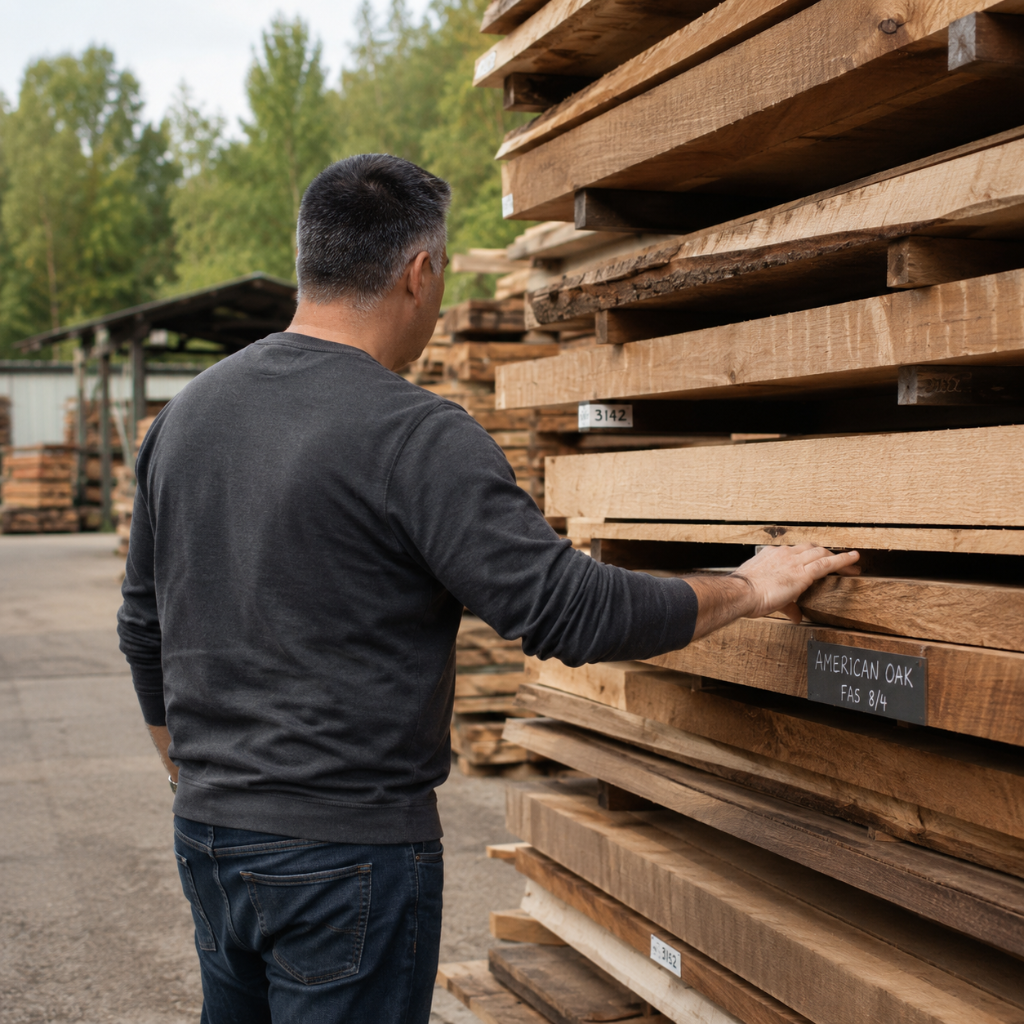
Materials are chosen with the room in mind, never from a catalogue. Clients are invited to the workshop to handle timber samples in person, to compare American Black Walnut against European Oak, Smoked Oak and Fumed Oak, and to set each alongside samples of the brass, leather and cloth that will sit with it. A board that reads warm in isolation can read cool against a specific interior, and the only way to know is to hold the two together.
Hainsworth cloth is considered alongside samples of the room's finishes, with colour selected to complement the timber, furniture and wider interior. Brass and bronze are compared for warmth and restraint, and the ageing characteristics of each material are explained honestly, so the client understands how the piece will look in ten years as well as on the day it arrives.
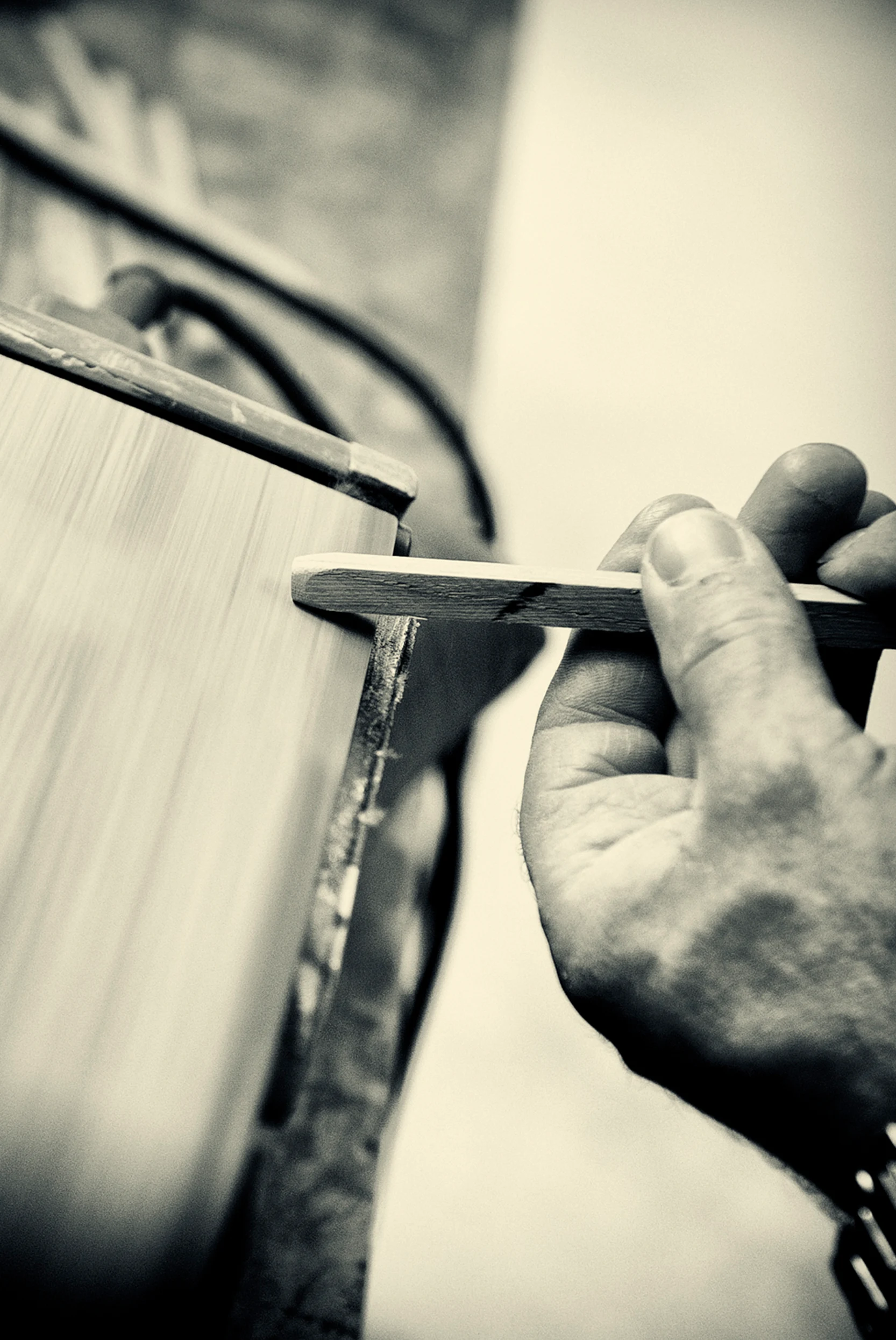
Cabinet Making
Once the design and materials are agreed, the commission moves to Bruno's Berkshire workshop. Selected hardwoods are prepared, joined and shaped using traditional cabinet-making techniques, supported by modern precision where appropriate.
As the piece develops, each component is fitted and checked before the furniture moves towards final assembly. Progress photography can be shared during the making, and workshop visits are welcomed by arrangement.
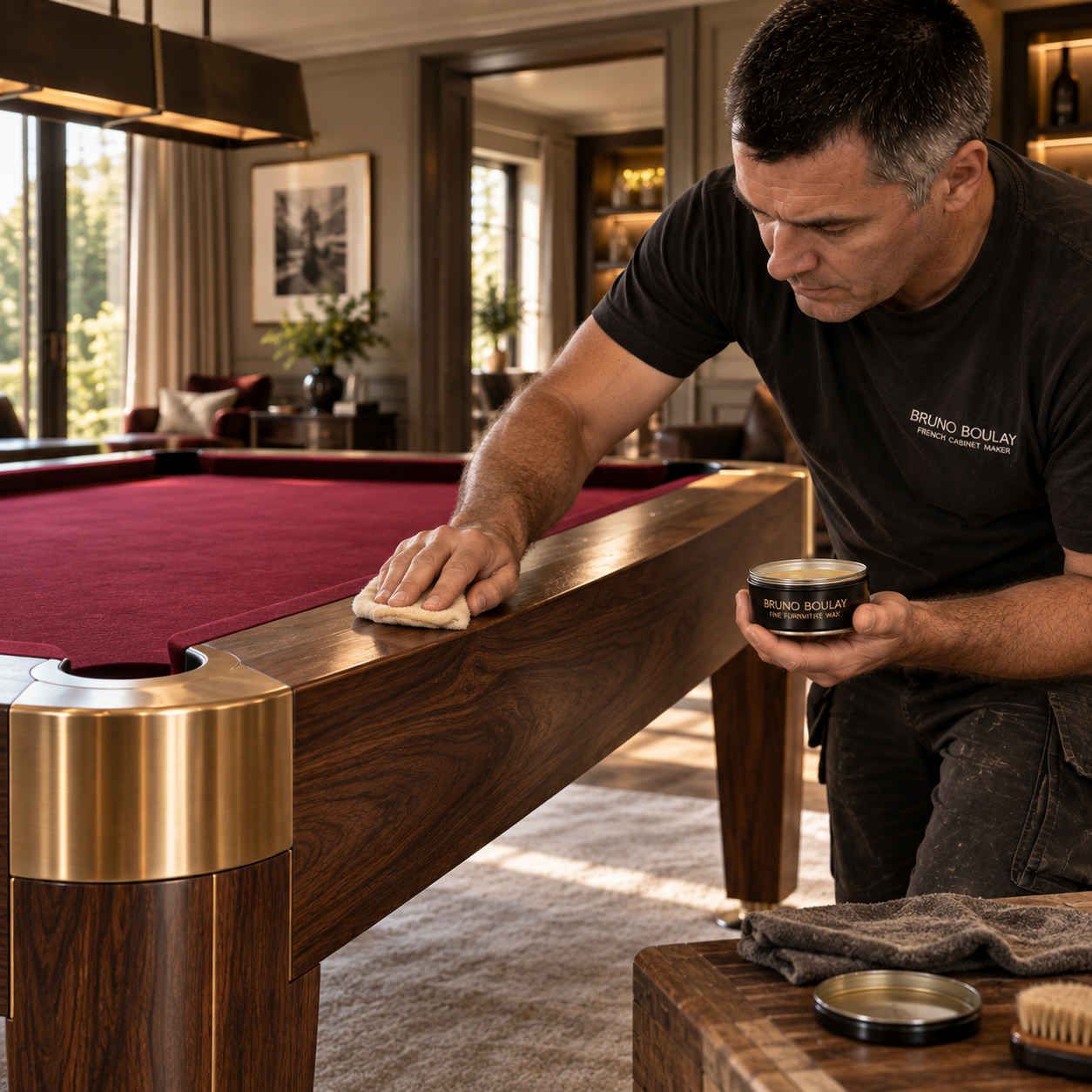
Hand Finishing
The character of the furniture develops through finishing. Timber is prepared and finished in carefully built stages, while brass, leather, resin and other details are fitted and resolved around the wider design.
Each surface and detail is inspected before the commission moves towards final assembly and preparation for installation.
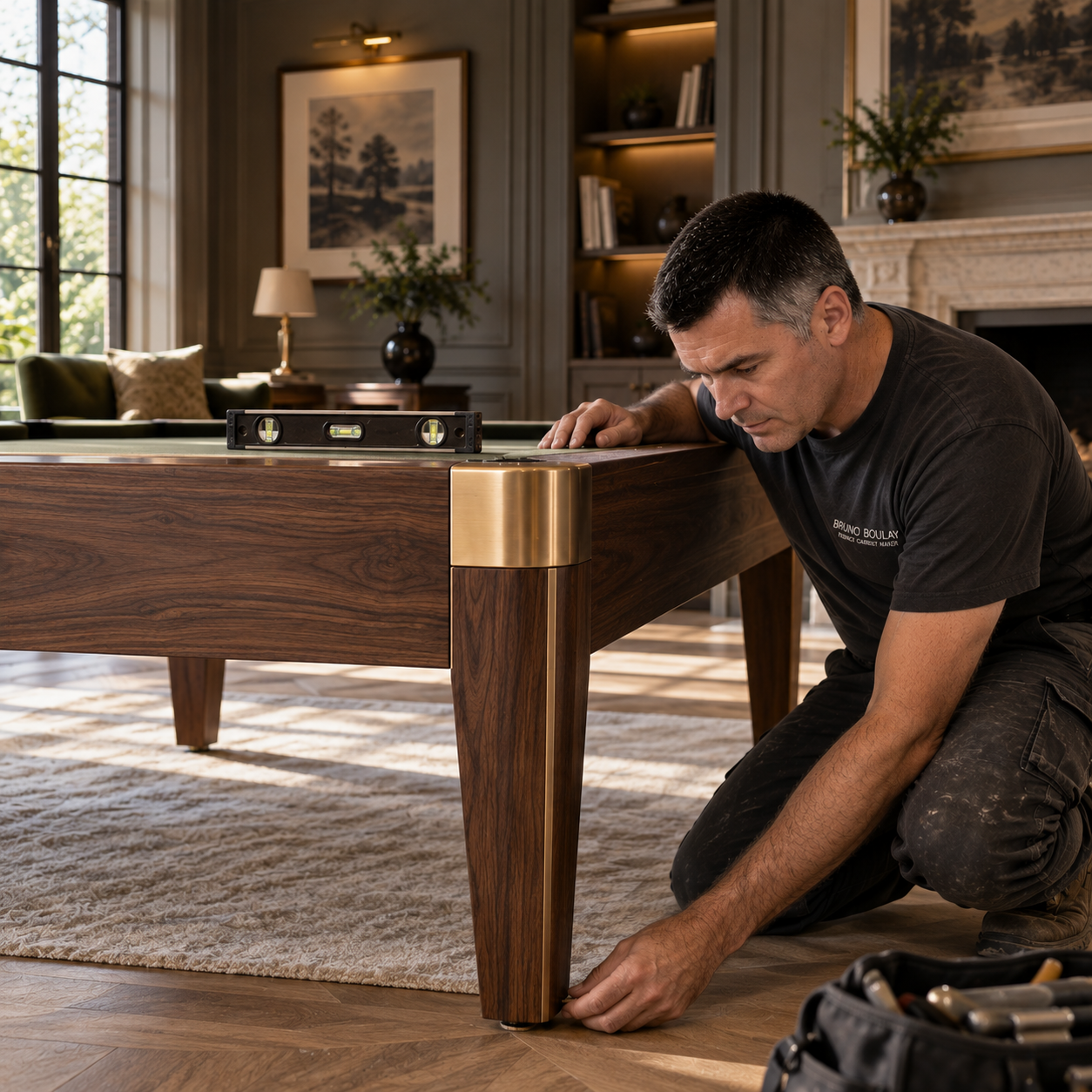
Installation
Delivery and installation are carefully coordinated by Bruno's team. The furniture is positioned in the room, the playing surface is levelled where required and final adjustments are made on site so the piece is correctly prepared for its setting and use.
Installation is part of the commission rather than simply delivery. At handover, care guidance is walked through in person, and the aftercare relationship begins.
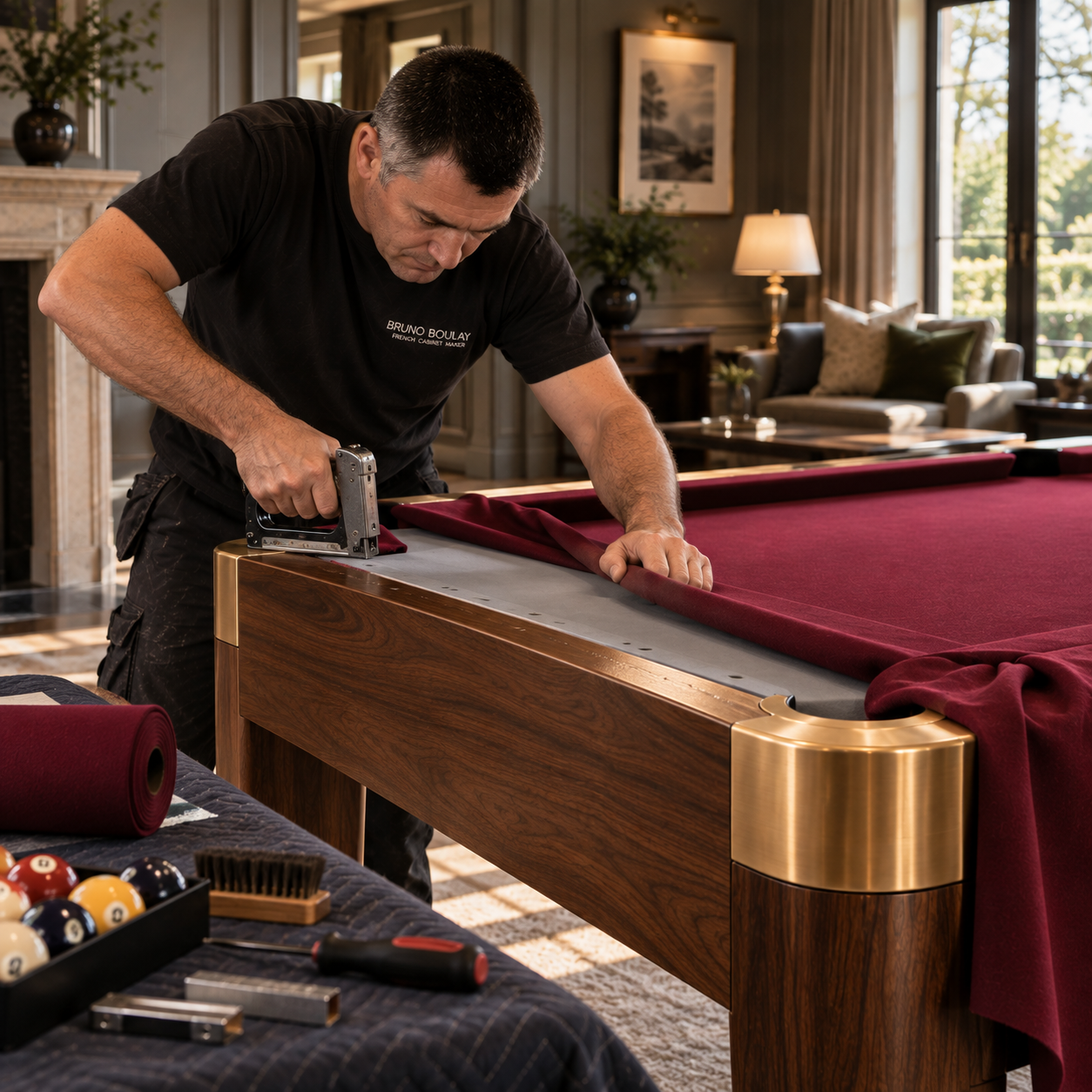
Aftercare
The relationship continues after installation. Bruno provides guidance on caring for the timber, cloth, leather and metalwork, while re-clothing, refinishing and other future maintenance can be discussed as the furniture ages and is used.
A commissioned piece is intended to be lived with, so the workshop remains available for advice on its care and maintenance after installation.
"A commission is a relationship as much as a piece of furniture."
Bruno Boulay
For the Trade
Working With Designers
Bruno works with interior designers, architects and developers from the earliest stages of a commission, providing drawings, material samples and specification support so the furniture can be developed alongside the wider interior scheme.
For DesignersQuestions
Commissioning Questions
Most commissions take approximately three to six months from design approval to installation, depending on the piece, materials and complexity. Bruno will confirm the expected programme as part of the proposal and keep you informed as the commission progresses.
From the Journal
Related Reading
Explore the philosophy, craftsmanship and decisions behind commissioning individually made Bruno Boulay furniture.

Begin Your Commission
The first step is a conversation. Tell us about your home, your room and the piece you have in mind.
Book a ConsultationWe use cookies to ensure essential site functionality and, with your consent, to understand how our website is used. Read our Cookie Policy to learn more.