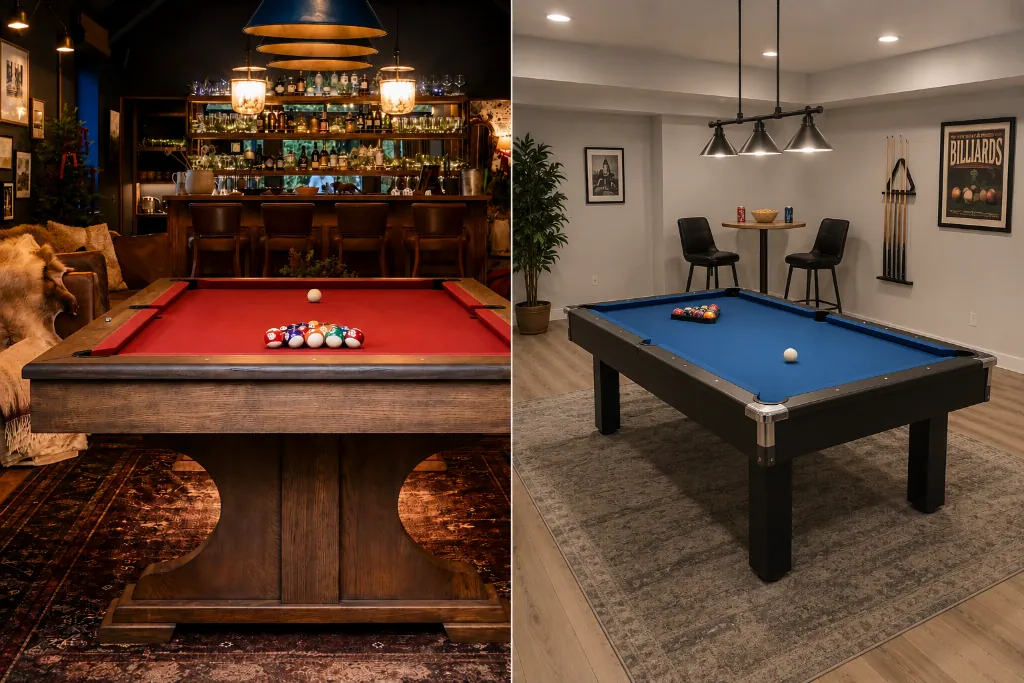
Two pieces of furniture can look almost identical in a photograph and be entirely different in reality.
One is made by a cabinet maker, by hand, from solid timber, to last for generations. The other is made on a production line, from engineered boards, to a price and a schedule.
The difference between cabinet making and mass production is not merely one of cost. It is a difference in materials, in method, in longevity, and ultimately in the kind of object you live with. Understanding it changes how you furnish a home.
The Materials
The first difference is in the material itself.
Cabinet making begins with solid hardwood, chosen board by board for its grain, its colour and its stability. The timber is the structure of the piece, and its character is visible in every surface.
Mass production relies on engineered boards, veneers and laminates. These materials are consistent and economical, but they cannot be worked by hand in the way solid timber can, and they do not age in the way solid timber does. A veneer hides the truth of the piece beneath it.
Our material library reflects the cabinet maker's commitment to honest, solid materials.
The Joinery
The joints are where the two approaches diverge most clearly.
A cabinet maker cuts and fits joints by hand, mortise and tenon, dovetails, housed joints, that draw on centuries of refinement. Cut precisely, these joints are stronger than the wood around them and hold the piece true for decades.
Mass production favours joints that can be made quickly by machine, often held together with staples, dowels and adhesives rather than fitted wood. These joints are adequate for the short term and unreliable in the long term.
This is why a cabinet-made piece can be repaired and refinished, while a mass-produced one is usually replaced.
The Method
Cabinet making is a sequence of patient, considered steps.
Timber is acclimatised. Components are cut to fine tolerances. Joints are fitted by hand. Surfaces are sanded through successive grades. Finishes are applied in stages and allowed to cure between each. Nothing is hurried, because quality cannot be hurried.
Mass production is organised for speed. Components are standardised, processes are automated, and the piece moves through the line as quickly as the schedule allows. The result is consistent, but consistency and quality are not the same thing.
The contrast is explored in our guide to handmade vs mass produced pool tables.
The Finish
A cabinet-made finish is built by hand.
Applied in multiple stages and refined by touch, it draws out the depth of the timber and invites the hand as much as the eye. It is warm, alive and individual, the unmistakable signature of true craftsmanship.
A mass-produced finish is applied uniformly, often as a sprayed lacquer, to seal and protect rather than to enhance. It reads as a surface rather than a material, and it ages by wearing away rather than by deepening.
The Longevity
The most important difference is measured in years.
A cabinet-made piece is designed to endure. Its joints hold, its timber moves with the seasons rather than against them, and its finish can be refreshed to restore the piece to its original beauty. It is made to be kept, repaired and passed on.
A mass-produced piece is made to be replaced. Its materials fatigue, its joints loosen, and its finish cannot be revived. After a decade, most mass-produced furniture has reached the end of its life.
This is the difference between an object that depreciates and one that accrues meaning, as we explore in our guide to what a cabinet maker does.
The Character
A cabinet-made piece is individual.
No two boards of walnut are the same, and no two hand-finished surfaces carry exactly the same character. A cabinet-made piece brings that individuality into the room, settling into its surroundings and growing more personal with every year.
Mass-produced furniture is, by design, identical. It brings consistency, but it cannot bring the quiet individuality that makes a room feel truly furnished rather than simply filled.
The Value Over Time
Cabinet-made furniture costs more at the outset. It is made of more expensive materials, by a more skilled hand, over a longer period.
But measured over the life of the piece, the calculation reverses. A cabinet-made table is bought once and kept for generations. A mass-produced table is bought, replaced, and bought again. The cheaper object becomes the more expensive one over time.
This is the case for cabinet making made in our guide to British heritage and French cabinet making.
Why the Difference Matters
The choice between cabinet making and mass production is a choice about the kind of home you want to live in.
It is a choice between furniture that is replaced and furniture that is kept. Between surfaces that wear and surfaces that deepen. Between objects that are identical and objects that are individual.
For the largest and most visible pieces in a home, that choice matters most of all.
Commissioning Cabinet-Made Furniture
If you are considering a piece made to last for generations, we invite you to explore our completed commissions, learn about the bespoke process, or book a consultation with the atelier.