Choosing the timber for a bespoke commission is one of the earliest and most consequential decisions in the design process. The timber sets the tone of the entire piece, its colour, its grain and the way it interacts with the light, architecture and furnishings of the room it will inhabit.
At Bruno Boulay's material library, four timbers form the core of the collection: American Black Walnut, European Oak, Smoked Oak and Fumed Oak. Each has its own character, and none is objectively better than another. The right timber depends on the room and the commission.
American Black Walnut
American Black Walnut is the signature timber of the workshop. Its deep chocolate tones and fine, figured grain create a warmth that deepens with handling and age. Walnut sits comfortably in both panelled country houses and warm contemporary interiors, and it pairs naturally with antique brass and burgundy or olive cloth.
For those considering bespoke pool tables, walnut offers a richness that anchors a room without overwhelming it. Read more about its character in our guide to why American Black Walnut is an exceptional timber for luxury furniture. For the timber in a pool table, see why American Black Walnut works so well for luxury pool tables.
European Oak
European Oak is paler and more open-grained than walnut, with a character that reads as well in restrained contemporary interiors as in traditional ones. Its tone sits comfortably alongside painted furniture and lighter floors, and it accepts finishes from natural through limed to bleached.
Oak is often the right answer where the room calls for character without darkness, pairing well with bronze, leather, slate or silver cloth. The two timbers are compared in our guide to walnut against oak.
Smoked Oak
Smoked Oak is produced through a process that deepens the timber's tone while preserving its natural grain. The result is a rich, smoky warmth that suits contemporary interiors particularly well, offering depth without the darkness of walnut.
Smoked Oak pairs effectively with cooler cloth colourways and more restrained metal finishes, making it a strong choice for modern interiors where a mid-tone timber is wanted.
Fumed Oak
Fumed Oak is treated to develop a deeper, more consistent tone throughout the timber. It carries a muted, aged quality that sits naturally in period properties and heritage interiors, complementing traditional architecture and darker, more saturated cloth colours.
How Timber Is Chosen with the Maker
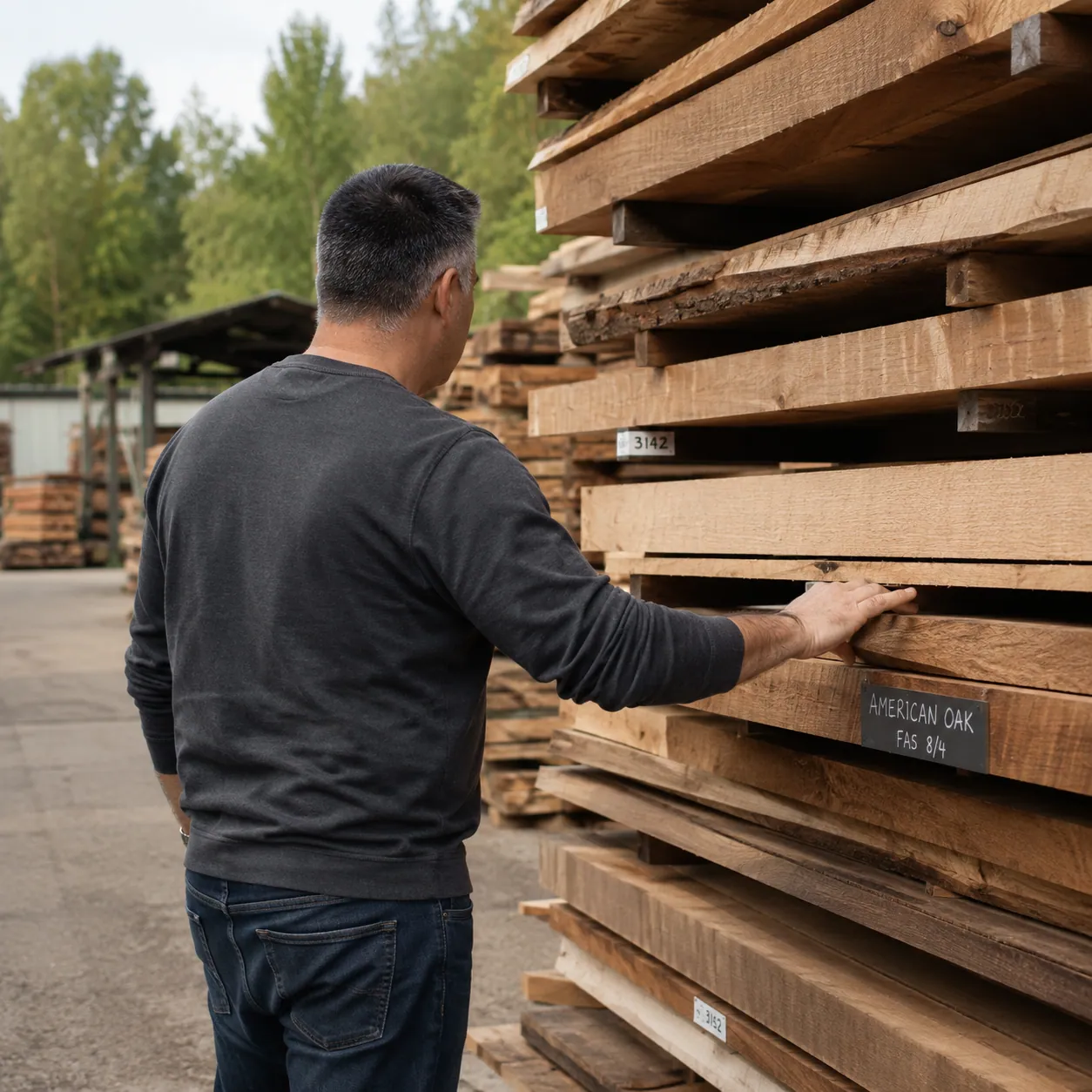
Timber is never chosen from a photograph. Boards are laid out together, because a table top draws on several of them and the grain must run as a single gesture across its width. Figure is matched, sapwood is placed with intention, and the boards are ordered so that the surface reads as one piece.
Movement matters as much as appearance. Hardwood expands and contracts with the seasons, so grain direction and the way a top is fixed affect how a surface behaves over decades. Finish is the final variable: oil deepens the tone, while a matte lacquer holds the colour it had on the bench.
How to Choose
The right timber depends on several factors:
- The natural and artificial light in the room
- The architecture and period of the property
- The colour of existing furniture, flooring and fabrics
- The finish to be applied to the timber
- The cloth and metal finishes that will accompany it
Rather than choosing in the abstract, timber is selected against samples of the interior. Boards and finishes are presented alongside samples of flooring, fabrics and paint, so the decision is made in context.
For a full comparison of the materials available across the collection, explore the material library, or learn more about the craftsmanship behind every commission.
Frequently Asked Questions
Which timber suits a games table also used for dining?
Walnut and oak both work where a table has a second life as a dining surface. Walnut suits rooms with stone and brass; oak holds a lighter interior.
How does American Black Walnut behave over twenty years?
Walnut deepens rather than fades, settling into a warmer brown and acquiring the soft sheen only hand-finished solid timber develops with use.